

Written by
Camelia
25 October, 2025
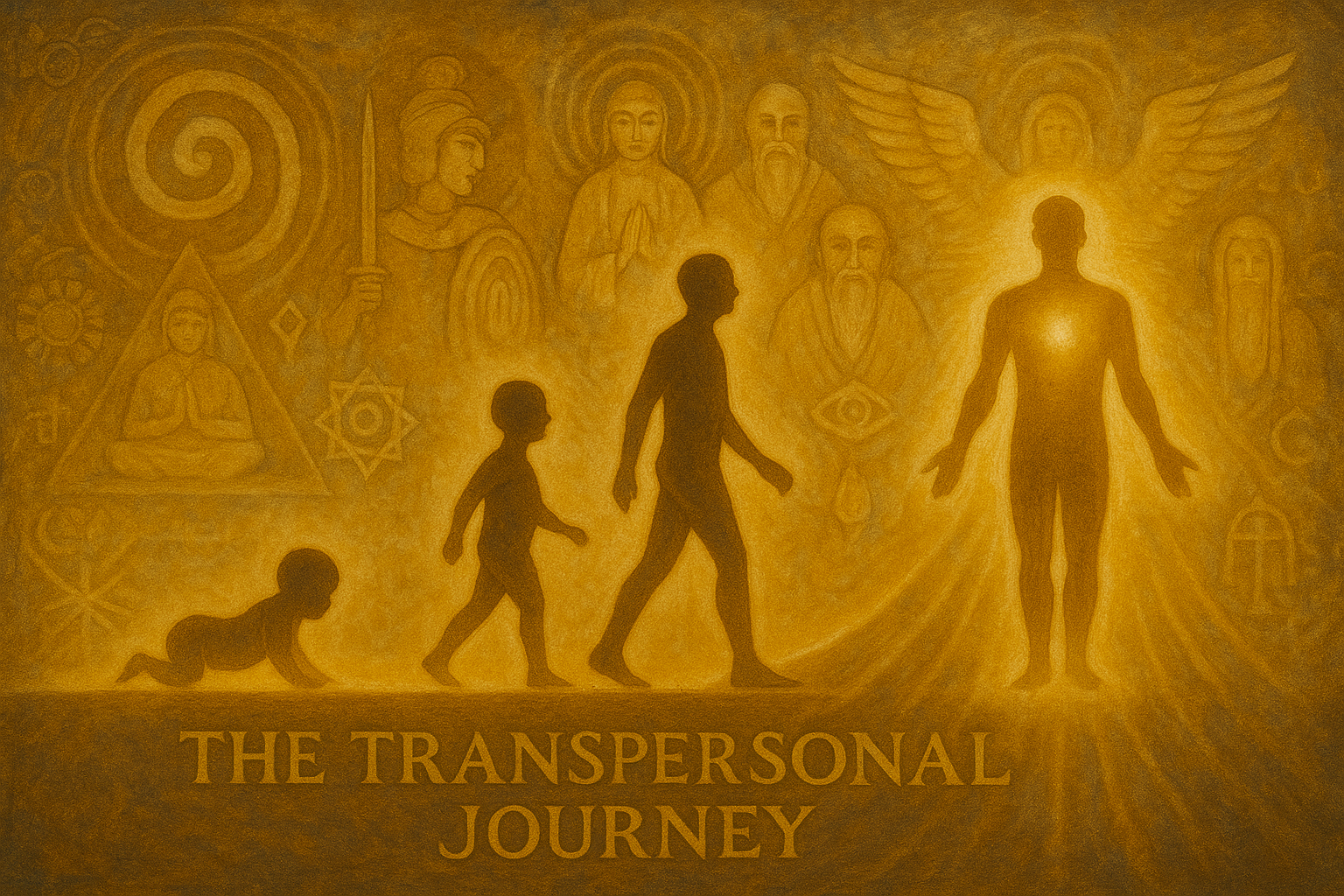
Transpersonal Psychology proposes that psychological healing and human development extend far beyond the limits of the personal ego. It recognizes that consciousness itself is multidimensional, capable of accessing layers of experience that include the biographical, the perinatal, the archetypal, the ancestral, and the spiritual.
Among the pioneers of this field, Stanislav Grof offered one of the most comprehensive “maps of the inner world,” demonstrating that human experience cannot be reduced to the brain or childhood conditioning alone. His work revealed that, in expanded states of consciousness, individuals access profound territories of the psyche that hold the key to healing and transformation.
Pneuma Psychology resonates strongly with this transpersonal view. It considers the human being not as a fixed personality, but as a dynamic entity capable of Re-evolution — a conscious, intentional expansion of awareness that leads to inner freedom. The path of Re-evolution requires self-knowledge, disciplined practice, and the courage to explore the deeper strata of the psyche.
Grof’s Cartography of the Unconscious
Stanislav Grof’s research in non-ordinary states of consciousness revealed that the psyche functions like a vast, multidimensional field. His cartography of the unconscious includes three primary domains:
1. The Biographical Level
This layer includes memories, emotional imprints, traumas, and psychological patterns formed throughout life. Traditional psychotherapy primarily focuses here.
2. The Perinatal Level
One of Grof’s most groundbreaking contributions was the discovery that the experience of birth — from intrauterine existence to delivery — imprints deep psychological matrices that shape emotional and relational patterns throughout life.
3. The Transpersonal Level
Here we encounter archetypes, collective symbols, ancestral memories, mythological landscapes, karmic patterns, encounters with spiritual beings, states of unity, and experiences of the sacred.
The Perinatal Matrices and Their Transformative Power
Grof described four foundational structures known as the Basic Perinatal Matrices (BPM I–IV), each corresponding to a phase of childbirth and its associated psychological themes:
BPM I — The Realm of Unity and Oceanic Oneness
Linked to: intrauterine existence before contractions begin.
Themes: safety, unity, timelessness, expansion, basic trust.
Distortions: When the intrauterine environment is disturbed — through physical, emotional, or toxic stress — BPM I may take on a negative quality known as “the amniotic hell.”
This can manifest later in life as:
- abandonment
- anxiety
- chronic feelings of isolation
- diffuse anxiety without a clear cause
- a sense of “not belonging” in the world
- longing for escape or dissolution
These distortions often reflect early impressions of unsafety or disconnection from the nurturing field.
BPM II — No Exit / Cosmic Constriction
Linked to: the onset of contractions while the cervix is not yet open — no movement is possible.
Themes: oppression, helplessness, entrapment, despair.
Distortions:
When strongly imprinted, BPM II can give rise to experiences such as:
- feelings of being trapped or stuck
- fear of situations with no perceived escape
- depression, hopelessness, or paralysis of will
- chronic experiences of pressure or “life closing in”
- existential despair
- fear of authority or of external forces exerting control
Psychologically, BPM II distortions often manifest as the belief that “no matter what I do, nothing will change.”
BPM III — Struggle, Fire, and Liberation
Linked to: the active struggle through the birth canal, involving intense pressure and physical effort while movement becomes possible.
Themes: intense energy, aggression, determination, sexuality, transformative struggle.
Distortions:
If unresolved, BPM III may produce:
- explosive anger or aggression
- compulsive self-assertion or domination
- attraction to intense, chaotic, or risky situations
- confusion between aggression and vitality
- destructive expressions of sexuality
- fear of authoritcycles of struggle and conflict without resolutiony or of external forces exerting control
This matrix often appears in people who oscillate between internal pressure and externalized intensity — seeking liberation through force, confrontation, or excessive intensity.
BPM IV — Breakthrough, Release, and Rebirth
Linked to: the moment of birth — the transition from darkness and compression into light and open space.
Themes: triumph, renewal, clarity, hope, transcendence.
Distortions:
Even this matrix can carry distortions when earlier stages were traumatic or unresolved. These may manifest as:
- spiritual bypassing (premature “light” without integrating darkness)
- manic episodes or unrealistic optimism
- denial of struggle or shadow
- compulsive need for constant breakthroughs or “rebirths”
- difficulty sustaining groundedness after intense highs
- craving transcendent states while avoiding emotional integration
BPM IV distortions often appear as forced positivity, spiritual inflation, or avoidance of unresolved material.
Why These Matrices Matter in Breathwork
Each matrix represents profound psychological and existential patterns that shape:
- emotional reactions
- relationship dynamics
- coping strategies
- worldview
- spiritual tendencies
During Pneuma Breathwork or any amplified state of consciousness, individuals may re-experience these matrices not as ideas, but as living, emotional, physical, and symbolic realities.
Recognizing them allows for:
- deep healing
- emotional release
- restructuring unconscious patterns
- symbolic integration
- greater psychological freedom
Understanding the matrices gives participants and facilitators a map of the unconscious, allowing experiences to be framed within a coherent psychological and spiritual model.
Re-Evolution: Conscious Transformation Beyond the Ego
The path of Re-evolution invites individuals to move beyond mechanical patterns and awaken the inner qualities of consciousness: clarity, will, presence, compassion, strength, and discernment.
Transpersonal Psychology shows that these qualities emerge naturally when the ego relaxes and deeper dimensions of the psyche become accessible.
Through expanded states — whether reached by breathwork, meditation, or intense introspection — the psyche organizes itself around a higher center of identity, one that transcends trauma and fragmentation.
Re-evolution is not simply healing — it is awakening.