

Written by
Camelia
26 October, 2025
Transpersonal Psychology reintroduced the spiritual dimension into psychological science, acknowledging that human beings have always sought to understand themselves not only through reason but through myth, ritual, meditation, and direct experience. Ancient cultures recognized that healing and transformation arise when one reconnects with the sacred dimension of existence.
Pneuma therapy continues this lineage by honoring the teachings of ancient traditions while integrating the discoveries of modern transpersonal theory, especially the work of Stanislav Grof. Together, they offer a holistic map for navigating the inner landscape.
Archetypes, Myths, and the Collective Unconscious
Carl Jung’s theory of the collective unconscious and Grof’s transpersonal observations demonstrate that archetypes and mythological motifs arise spontaneously during expanded states of consciousness. These symbols are universal, appearing across cultures and epochs.
They serve as teachers, gateways, and mirrors that reveal hidden aspects of the psyche.
Pneuma Psychology encourages the exploration of these archetypal experiences through:
- symbolic analysis
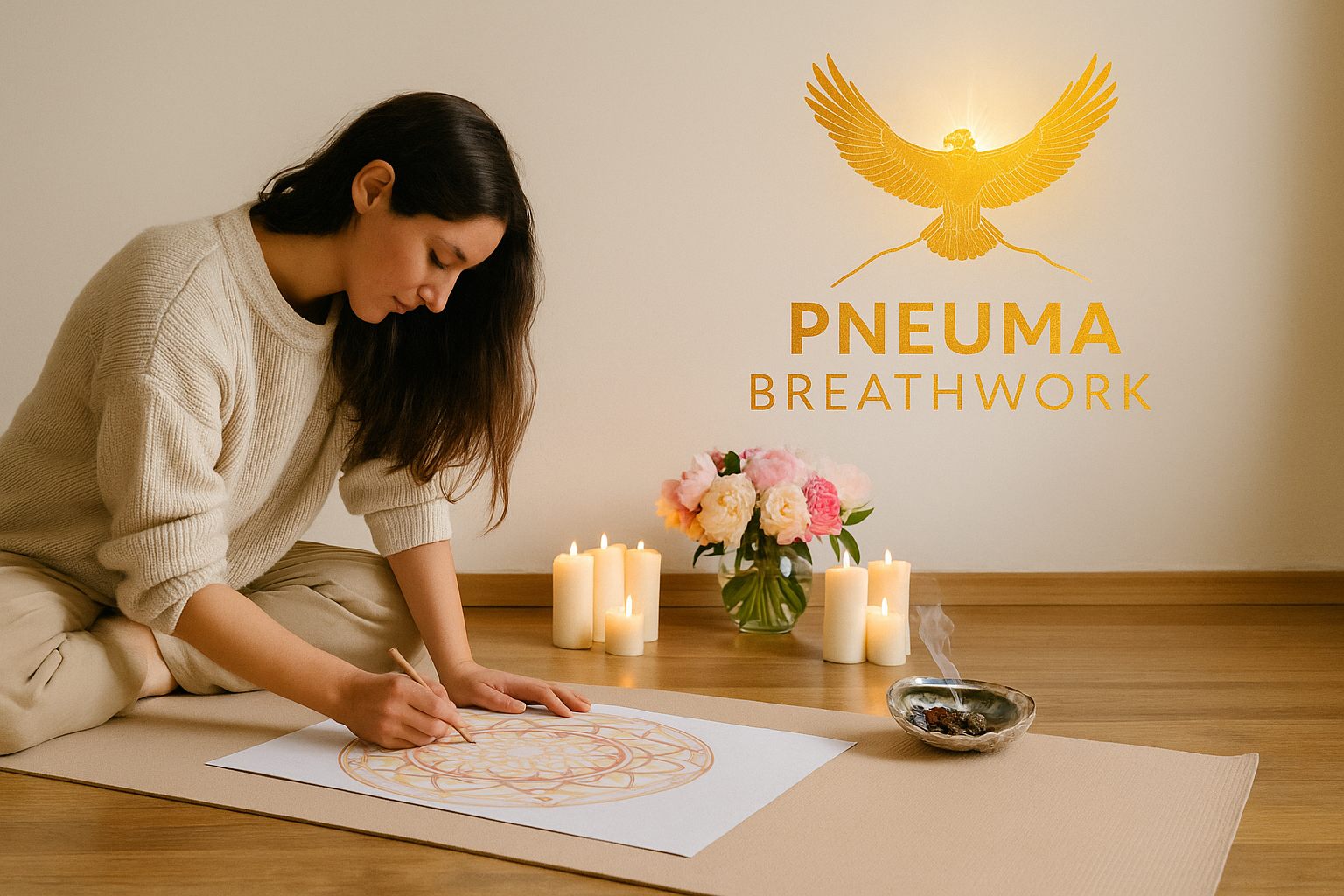
- mandala work
- mythological interpretation
- ethical and psychological integration
Ancient traditions saw these symbols as messages from the soul, guiding the initiate through stages of inner transformation.
Birth Trauma and Perinatal Dynamics Across Cultures
For centuries, spiritual traditions described symbolic “death–rebirth” processes. Grof’s research clarified the psychological roots of these experiences: the perinatal matrices.
- symbolic analysis
- mandala work
- mythological interpretation
- ethical and psychological integration
Myths such as:
- the descent of Inanna
- the Egyptian journey through the Duat
- the Orphic mysteries
- the Tibetan Bardo teachings
- the Christian baptismal symbolism
all reflect the same underlying stages described by BPM I–IV.
These symbolic journeys map directly onto emotional and psychological transformations that occur during conscious breathwork and deep introspection.
The Inner Journey as a Universal Human Calling
Every ancient culture cultivated practices that opened the doorway to altered states:
- breathwork
- chanting
- drumming
- meditation
- sacred plants
- initiation rituals
These states allowed individuals to encounter their own psyche in expanded form, reconnecting with the deeper truth of being.
Grof’s work validated these experiences scientifically, showing that they are inherent to the human organism and play a vital role in psychological maturation.
Pneuma therapy brings this understanding into a contemporary framework, offering safe, guided practices that allow participants to experience:
- symbolic catharsis
- spiritual insight
- archetypal encounters
- emotional liberation
- ethical transformation
This integration of ancient wisdom and modern psychology creates a powerful pathway for healing.
The Meaning of Inner Work
Inner work is the heart of both transpersonal traditions and pneuma.
It is the ongoing effort to transform unconscious patterns into awareness and unite fragmented inner states into a coherent, conscious whole.
Grof’s cartography helps practitioners recognize the terrain they encounter, while Pneuma breathwork offers the philosophical, ethical, and spiritual tools needed to interpret and integrate these experiences.
Through breathwork, symbolic expression, and guided introspection, individuals discover that their suffering, their stories, and even their traumas are part of a larger evolutionary process — one that aims to awaken essential qualities such as love, wisdom, and compassion.
The final goal is not merely symptom relief, but inner liberation, the rediscovery of our true identity beyond the ego.